Stumps That Stop You From Using Your Yard
Stump grinding in O'Fallon for hazards, mowing obstacles, and ground-level clearing after tree removal
A stump left behind after tree removal or storm damage does more than look out of place—it interrupts mowing lines, blocks landscaping plans, and creates a raised obstacle that becomes a liability in high-traffic yard areas. Yard Restoration provides professional stump grinding for residential and commercial properties in O'Fallon, working around yards, fence lines, driveways, and wooded areas where stumps have been left after clearing or storm events. The work is focused on grinding each stump below ground level so the space can be returned to productive use.
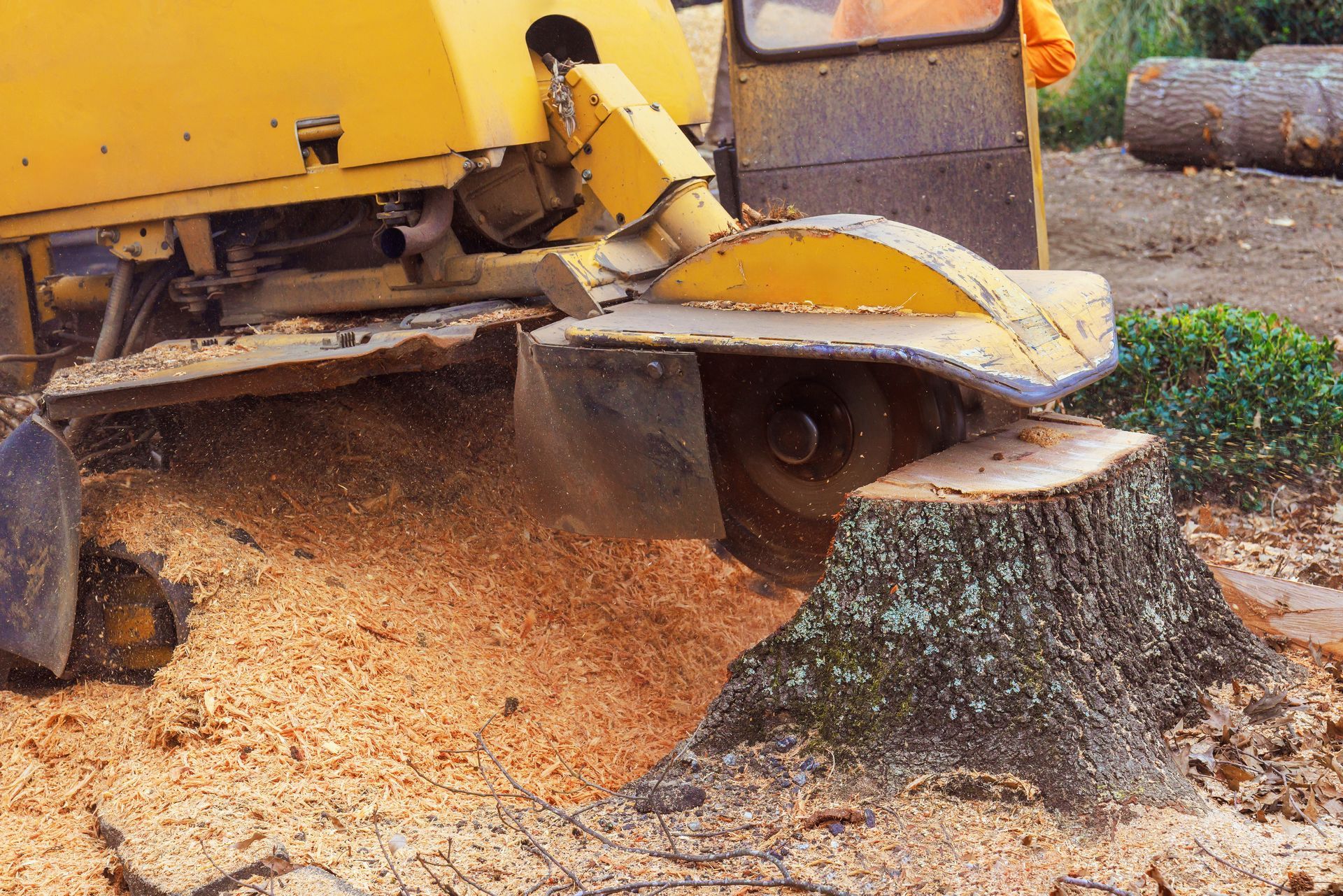
The process involves running a grinding machine over the stump in controlled passes, reducing the wood to chips and cutting below the surface to eliminate the root collar. How deep the grind needs to go depends on what the area will be used for afterward—grass seeding requires less depth than new construction or a fence post placement. Yard Restoration works carefully around surrounding landscape features, hardscaping, and utilities to avoid unnecessary disruption to the property during the job.
Request an estimate based on the number of stumps, their diameter, and the site conditions around them.
What Stump Grinding Actually Accomplishes
Grinding removes not just the visible trunk base but the material just below grade that prevents clean re-use of that ground. A stump left above grade holds moisture and provides a habitat for wood-boring beetles and carpenter ants that can spread to nearby structures or healthy trees. By cutting below the surface, the grinding process removes the anchor point for both regrowth and pest activity—two outcomes that surface-level cutting alone does not address.
Once the stump is ground down, the immediate area is level enough to mow over, plant into, or prepare for construction without working around an obstacle. The chips left behind can be raked out and used as mulch, or the cavity can be filled and seeded depending on what the area will become. What changes most noticeably is that the yard flows continuously again—no routing the mower around a stump, no tripping point near a walkway, no dead zone in the middle of an otherwise usable space.
Properties in O'Fallon with mature tree canopy—particularly those developed in subdivisions from the 1980s and 1990s where large oaks and maples were common in residential lots—often deal with multiple stumps at once when older trees come down. The approach to a multi-stump job differs from a single removal in terms of staging and equipment positioning, particularly near fence lines or garden borders where the grinder's swing radius has to be planned before the first cut.
What to Know Before the Work Starts
Stump grinding comes with a few straightforward preparation considerations that affect how efficiently the job runs and what the finished area looks like. Here are the most common questions about how the work gets done.
What determines how deep a stump gets ground?
The intended use of the area afterward drives the grinding depth. Grass or mulch beds generally require four to six inches below grade, while areas being prepped for construction, concrete, or fence posts need the grind to go deeper to clear the root collar completely.
How does the grinder work around fence lines and landscaping borders?
The machine is positioned to direct the cutting wheel into the stump while keeping the discharge away from fencing, garden edging, and planted areas. The operator adjusts the angle of approach based on what is immediately adjacent to the stump before starting each pass.
Why does stump regrowth happen after some removals and not others?
Regrowth occurs when the root collar—the flared base just below grade—is left intact. Grinding through that zone prevents the tree from sending up new shoots, which surface cutting or chemical treatment alone often fails to stop reliably.
What happens to the wood chips after grinding?
The chips fill the cavity left behind and can be left in place as natural fill, raked out and used as mulch elsewhere on the property, or removed depending on the client's preference and what the area will be used for next.
How does the age of a stump affect how it grinds?
Older, drier stumps are typically harder and more brittle, which can slow the grinding process and increase chip scatter. Fresher stumps from recently removed trees are softer but may have deeper root systems that require additional passes to address the root collar fully.
Yard Restoration handles stump grinding across residential lots, commercial properties, and wooded acreage where stumps are standing in the way of landscaping, construction prep, or routine property maintenance. To move forward, contact Yard Restoration directly to describe the stumps on your property and arrange an on-site estimate.