Systems That Prevent Pooling and Foundation Damage
Drainage solutions in O'Fallon for properties with water pooling, erosion, and saturated soil
Poor drainage causes foundation damage, basement seepage, and landscaping failure across St. Charles County—clay soils don't absorb water quickly, and spring runoff has nowhere to go without graded slopes and subsurface systems that direct flow away from structures. Yard Restoration designs and installs drainage systems including gravel swales, perforated drain tile, catch basins, and surface grading across O'Fallon and Foristell where seasonal saturation and inadequate site slopes create persistent water problems. Proper drainage requires both surface grading for immediate runoff and subsurface tile for groundwater management, with system design based on soil type, property topography, and local code requirements.
Drainage installation begins with site survey and water flow analysis to identify where water collects, which direction it moves, and what barriers prevent proper drainage—this determines whether surface grading alone solves the problem or whether subsurface systems are required. Gravel swales handle surface runoff by creating visible channels with adequate slope, while perforated drain tile with gravel filtration collects subsurface water and carries it to daylight outlets or collection basins.
Schedule a property evaluation to identify specific drainage concerns and water flow patterns affecting your site.
What Changes After Drainage Systems Are Installed
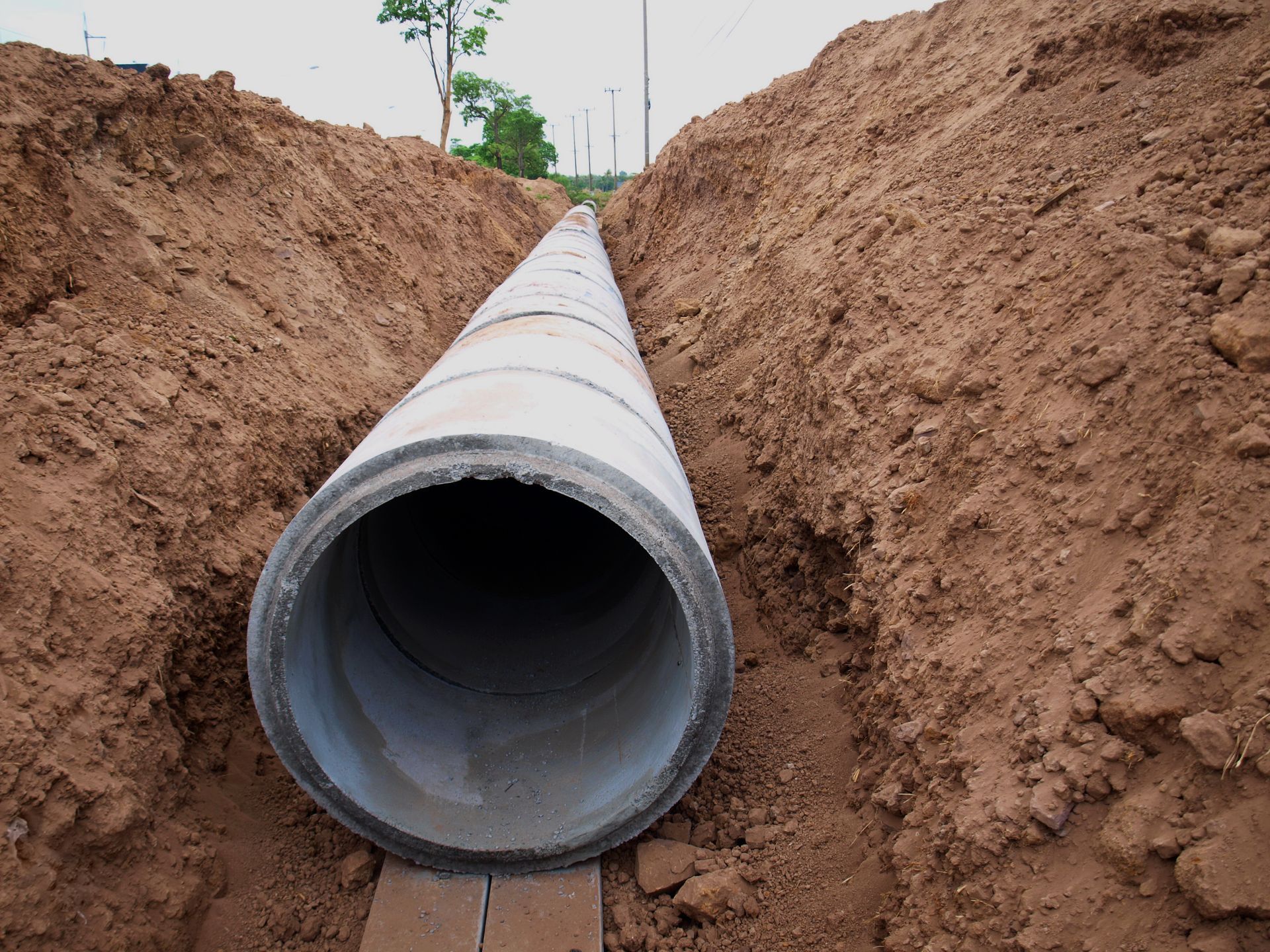
Installation involves calculating grading slopes to meet code-compliant drainage—typically a minimum quarter-inch drop per foot of horizontal distance—then excavating for drain tile placement where subsurface water requires collection. Perforated tile is surrounded by gravel filtration fabric to prevent clay soil from clogging perforations, with the system daylighting to lower elevations or connecting to catch basins where direct drainage isn't possible.
Once the system is functioning, you'll notice water moving off the property during and after rain rather than pooling in low areas, soil that dries faster between weather events, and foundations that remain dry without seepage or moisture infiltration. The most obvious difference shows up during spring storms—areas that previously held standing water for days now drain within hours as surface and subsurface systems remove water continuously.
Drainage solutions are tested for positive flow after installation to confirm water moves through the system as designed and exits at appropriate locations without creating new erosion or flooding adjacent properties. Systems designed for O'Fallon and St. Charles County conditions account for clay soil permeability and seasonal runoff volumes that exceed what standard residential drainage can handle without engineering.
Answers to Frequent Drainage Questions
Property owners dealing with persistent water problems typically ask about system design, installation methods, and how drainage integrates with existing site features.
What causes drainage problems on properties that didn't have issues before?
Soil compaction from construction or landscaping reduces water infiltration, and changes to adjacent properties can redirect runoff onto your site—new drainage problems often result from altered conditions rather than system failure.
How does drain tile work in clay soil?
Perforated drain tile collects groundwater that moves slowly through clay and carries it to daylight outlets—without tile, water saturates the soil and remains near foundations or low areas for extended periods.
When should catch basins be used instead of direct drainage?
Catch basins collect water where surface grading can't provide adequate slope to move water off the property naturally—they're common in O'Fallon areas with flat lots or where municipal drainage systems require controlled discharge points.
What's the difference between surface grading and subsurface drainage?
Surface grading directs rainwater runoff away from structures immediately, while subsurface drain tile collects groundwater that infiltrates below the surface—most drainage problems require both systems working together.
How long does drainage installation take?
Installation duration depends on system complexity and site conditions, ranging from a single day for surface grading to multiple days for extensive subsurface tile networks with catch basins—testing and verification add time but confirm proper function.
Yard Restoration handles drainage projects throughout O'Fallon, Wentzville, and Foristell with excavation equipment capable of trenching for tile installation and grading for surface water management. Request a site consultation to review water flow patterns and drainage system options specific to your property conditions.