Walls Built to Hold Soil and Water
Retaining walls in O'Fallon for erosion control, grading transitions, and properties with slope challenges
St. Charles County clay soils and seasonal water movement create specific demands for retaining wall construction—walls that hold back soil also redirect water, and both functions fail without proper drainage design and frost-resistant footings. Yard Restoration designs and builds retaining walls using timber, stone, and engineered systems across O'Fallon, Wentzville, Foristell, and surrounding St. Charles County properties where slopes, erosion, or grade changes require structural support. Frost heave risk in this region requires below-grade footings and material selection suited to freeze-thaw cycles that can shift improperly installed walls within a single winter.
Retaining wall construction begins with site grading and drainage analysis before any material is selected—the wall's height, soil pressure, and water flow determine whether timber, stone, or engineered block systems provide adequate strength and longevity. Walls installed without perforated drain tile and proper gravel backfill trap water behind the structure, leading to hydrostatic pressure that cracks or collapses the wall during spring thaw or heavy rain events common to O'Fallon and Foristell properties.
Schedule a property evaluation to identify specific drainage and grading concerns affecting your site.
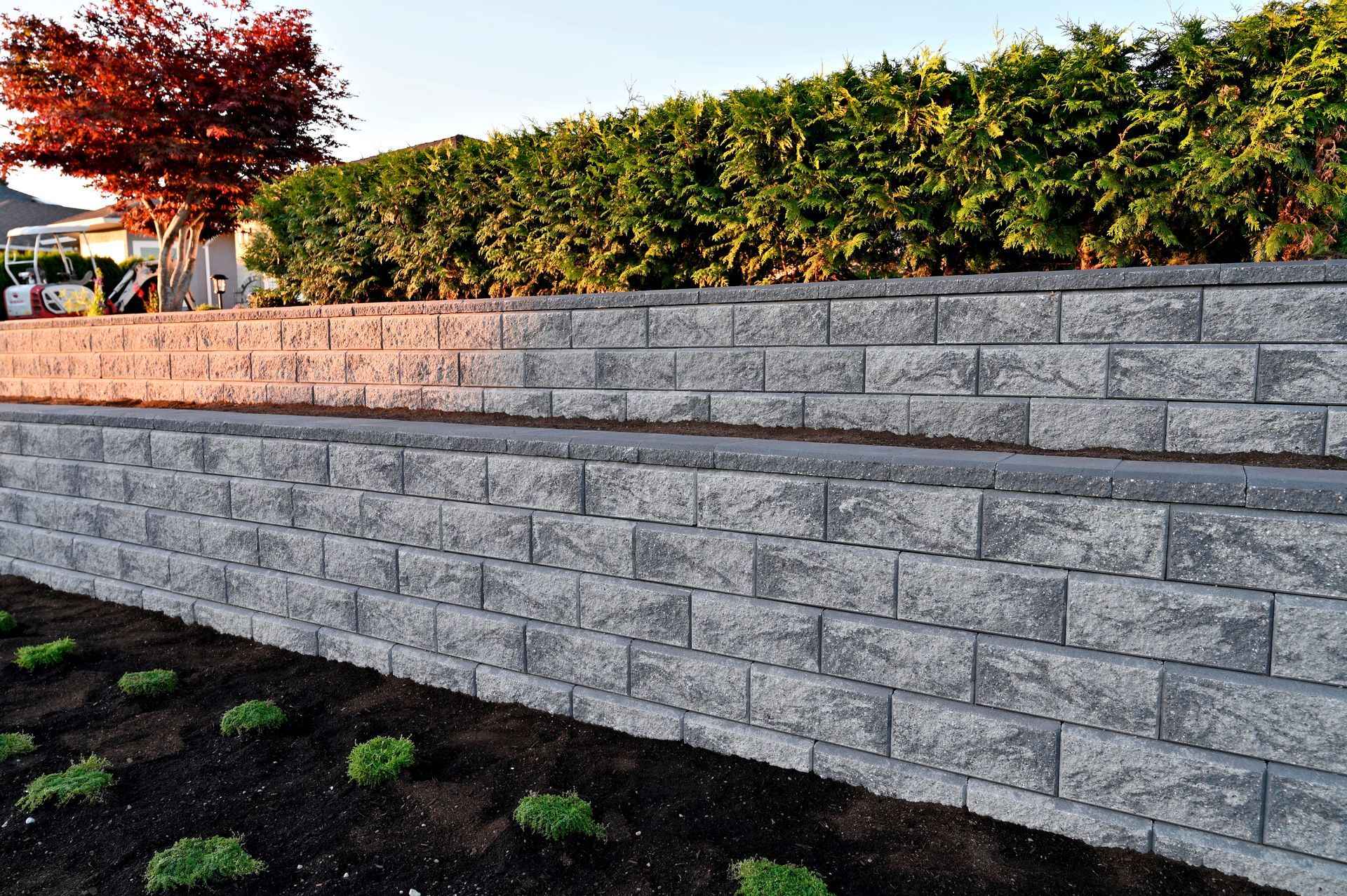
What Proper Retaining Wall Installation Requires
Installation includes engineered footing depth below the frost line, compacted backfill to prevent settling, and gravel filtration layers that direct water to perforated drain tile running the length of the wall. Material selection accounts for local code compliance and the specific loading conditions your property presents—stone veneer walls require different structural support than solid timber or modular block systems.
Once the wall is complete, you'll notice defined level areas where slopes previously caused erosion, stable soil retention that prevents washout during storms, and drainage that moves water away from the wall rather than pooling behind it. The difference shows up most clearly after the first heavy rain—water exits through the drainage system instead of saturating the soil and pushing against the wall structure.
Yard Restoration warranties the structural installation and coordinates drainage planning with retaining wall design to address both soil retention and water management as connected systems. Wall construction includes compliance with local grading codes and site-specific engineering where height or soil conditions require additional reinforcement.
Questions Before Starting Your Retaining Wall Project
Property owners in St. Charles County often ask about wall design, material durability, and drainage integration before moving forward with installation.
What determines whether a timber or stone wall works better for my property?
Soil type, wall height, and drainage conditions determine material selection—timber walls handle moderate slopes and residential applications, while stone and engineered block systems support taller walls and heavier soil loads common in O'Fallon clay-based properties.
How deep do footings need to go for frost protection?
Footings must extend below the frost line to prevent heave during freeze-thaw cycles, with depth varying based on wall height and soil bearing capacity—improper footing depth causes walls to shift or crack within the first year.
What happens if drainage isn't installed behind the wall?
Water trapped behind a retaining wall creates hydrostatic pressure that cracks or collapses the structure during spring saturation or heavy rain—perforated drain tile and gravel backfill prevent this by channeling water away from the wall.
When should retaining walls be built relative to other site work?
Walls are typically constructed after rough grading establishes drainage flow but before final landscaping or hardscaping—this sequence allows proper backfill compaction and drainage tie-in without disturbing finished surfaces.
How long does a properly installed retaining wall last?
Walls built with engineered footings, drainage systems, and appropriate materials for St. Charles County conditions function for decades—walls without proper drainage or footing depth fail within a few years due to water damage or frost movement.
Yard Restoration operates throughout O'Fallon and St. Charles County with the equipment and crew coordination required for retaining wall projects that integrate drainage, grading, and structural requirements. Request a site consultation to review specific wall options and drainage planning for your property.